Longmen Grottoes
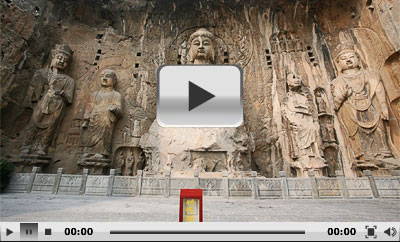
Longmen Grottoes Facts
Length: 1,000 meters (1, 094 yards) from north to south
Construction begining: in Northern Wei Dynasty (386-534)
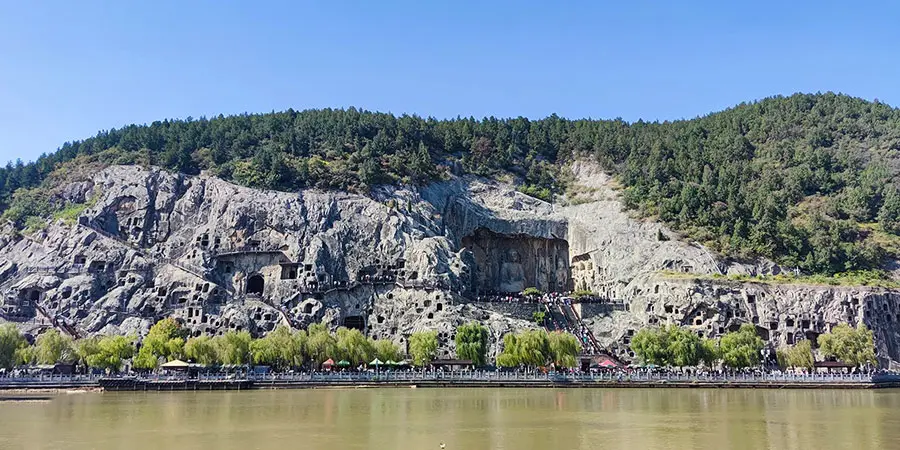
The Longmen Grottoes, aka Longmen Caves, are between Mount Xiang and Mount Longmen and face Yi River. Longmen Grottoes, Yungang Caves and Mogao Caves are regarded as the three most famous treasure houses of stone inscriptions in China.
Who built the Longmen Grottoes? Emperor Xiaowen of Northern Wei Dynasty firstly directed the construstion around the year 493 when he moved the capital to Luoyang. After that, the Longmen Caves were continuously built during the 400 years until the Northern Song Dynasty (960-1127). The scenery area holds over 2,300 holes and niches, 2,800 steles, 40 dagobas, 1,300 caves and 100,000 statues. Most of them are the works of the Northern Wei Dynasty and the flourishing age of the Tang Dynasty (618-907). Lots of historical materials concerning art, music, religion, calligraphy, medicine, costume and architecture are kept here.
 Twenty Inscriptions of Longmen Grottoes
Fengxian Temple
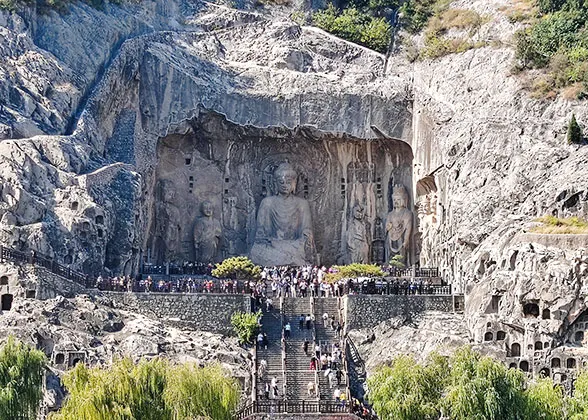
 Fengxian Temple was built in the Tang Dynasty and it is the largest grotto in Longmen Grottoes with a width of 36 metres (about 118 feet) and a length of 41 metres (about 136 feet). There are nine major figures of various facial appearances and temperaments in the temple that were built in accordance with the Buddhist rite and their relationships by the artists.
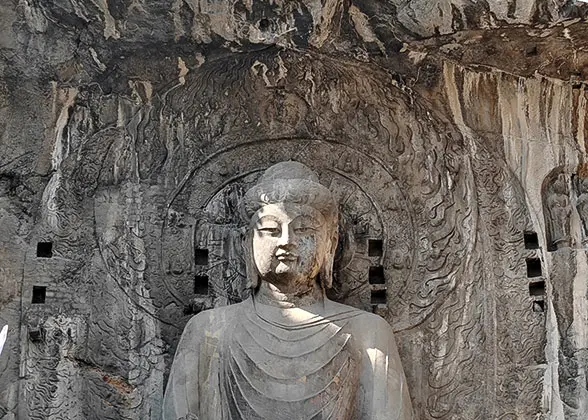
 The most impressive figure is the statue of Vairocana Buddha sitting cross-legged on the eight-square lotus throne. It is 17.14 metres (about 56.23 feet) in total height with the head four metres (about 13 feet) in height and the ears 1.9 metres (about 6.2 feet) in length. Vairocana means illuminating all things in the sutra. The Buddha has a well-filled figure, a sacred and kindly expression and an elegant smile. According to the record on the epigraph, the Empress Wu Zetian together with her subjects took part in the ceremony of Introducing the Light (a Buddhist blessing that the Buddha opens the spiritual light of himself and shares it with others).
At the sides of Vairocana there are two statues of Vairocana Buddha's disciples, Kasyapa and Ananda, wearing prudent and devout expressions. The figures of Bodhisattvas and devas can also be found in the temple. Some have dignified and genial expressions, while others are majestic and fiery. The various appearances and delicate designs are the representations of Empire Tang's powerful material and spiritual strength as well as the high crystallization of people's wisdoms.
Wanfo Cave
 Wanfo Cave in Longmen Grottoes, completed in 680, is a typical chronological cave of the Tang Dynasty of two rooms and square flat roofs. Its name is due to the 15,000 small statues of Buddha chiseled in the southern and northern walls of the cave. The main Buddha Amida sits on the lotus Sumeru throne, having a composed and solemn face. The wall behind Amida is carved with 54 lotuses upon which there are 54 Bodhisattvas in different shapes and with various expressions.
In addition, there are lifelike reliefs of pretty and charming singers and dancers on the wall. The singers are accompanied by various kinds of instruments and the dancers dance lightly and gracefully to the music. The whole model in the cave has created a lively and cheerful atmosphere. On the southern wall outside the cave is carved a statue of Kwan-yin of 85 centimetres (about 33 inches) in height, holding a pure bottle in the left hand and deer's tails (as a symbol of brushing off the dust in spirit) in the right hand. This figure is well designed and is regarded as an example of Bodhisattva statues of Tang Dynasty in Longmen.
Guyang Cave
Binyang Cave
 After the constructions of Guyang Cave, the royalty of the Northern Wei Dynasty constructed a series of lager scale caves, which are the northern, southern, and middle Binyang Caves. The middle cave, taking the longest time from 500 to 523, is the only one of the three finished during period of the Northern Wei. There are 11 big statues in the cave. Sakyamuni is of dignified and serene appearance, while his disciple and Bodhisattva are of slender figure and elegant look, which are the typical style of the late Northern Wei Dynasty. The floor is engraved with lotus patterns and on the rooftop is a rilievo of flourishing lotus flower.
Lotus Cave (Lianhua Cave)
In addition, there is Prescription Cave that has about 140 prescriptions engraved on the walls, showing the achievements of medicine in ancient China. Some of the prescriptions are still used today. Other caves and temples like Xiangshan Temple, Huangfugong Cave, and Qianxi Temple can also be found in Longmen Grottoes.
How to get to Longmen Grottoes from Luoyang
Take Bus 53/ K53, 60/ K60, 71, 81/ K81, 99/ K99, or 167 to Longmen Shiku (Longmen Grottoes) Station.
2. From Luoyang Railway Station:
By Bus: take bus no. K81 and get off at the last station.
By Taxi: it costs around CNY 35 to 40.
3. From Longmen Railway Station:
By Bus: take bus no. 71 and get off at Longmen Shiku Station.
By Taxi: it costs around CNY 15
How to get to Longmen Grottoes from Xi'an
How to get to Longmen Grottoes from Beijing
| Entrance Fee | CNY 90(including grottoes on East and West Hills, Xiangshan Temple and Bai Garden); Free for children below 1.2 meters (3.9 feet). |
|---|---|
| Opening Hours | Feb. & Mar.: 08:00 - 18:00 Apr. 1 - Oct. 7: 08:00 - 18:30 Oct. 8 - 31: 08:00 - 18:00 Nov. - Jan.: 08:00 - 17:00  Note: Note:1. Ticket sale ends an hour before the closing time. 2. During the May Day Holiday and National Day Holiday (Oct. 1 to 7), and on Friday, Saturday and Sunday during Luoyang Peony Culture Festival, it opens 30mins earlier and closes 30mins later. |
9 Historical Places in China You Should Never Miss Recommended Guided Tours to Longmen Grottoes:
Luoyang 3 Days Tour from $379
1 Day Bullet Train Tour to Luoyang from Xi'an from $179
5 Days Xi'an and Luoyang Tour
- Last updated on Nov. 28, 2024 -